
Why we need this
Why is this project so important and how can it impact the lives of the poorest in Africa?
This project is, compared to other projects, easy to apply. The benefits and impact on the local community could we huge. The main challenge is to show people that we need a diffent way of farming to make it in the future. The conventional way of farming is exhausting the land.
Why we need a different way of farming
Groundwater is disappearing
Due to climate change, rainfall is decreasing year after year. Widespread deforestation is accelerating the loss of groundwater, and on top of that, water is being extracted faster than it can be replenished. As a result, people are already being forced to abandon their land in search of new farmland because the water has simply run out.
Why Floating Farms are a solution to this problem
Growing food on a floating farm eliminates the need for irrigation, meaning people no longer have to pump groundwater to water their crops. This could save thousands of farmers from daily water extraction. The floating farm itself uses no groundwater at all. If all of a village’s food were produced this way, it could significantly reduce pressure on local groundwater resources—and potentially solve the water crisis in the area.
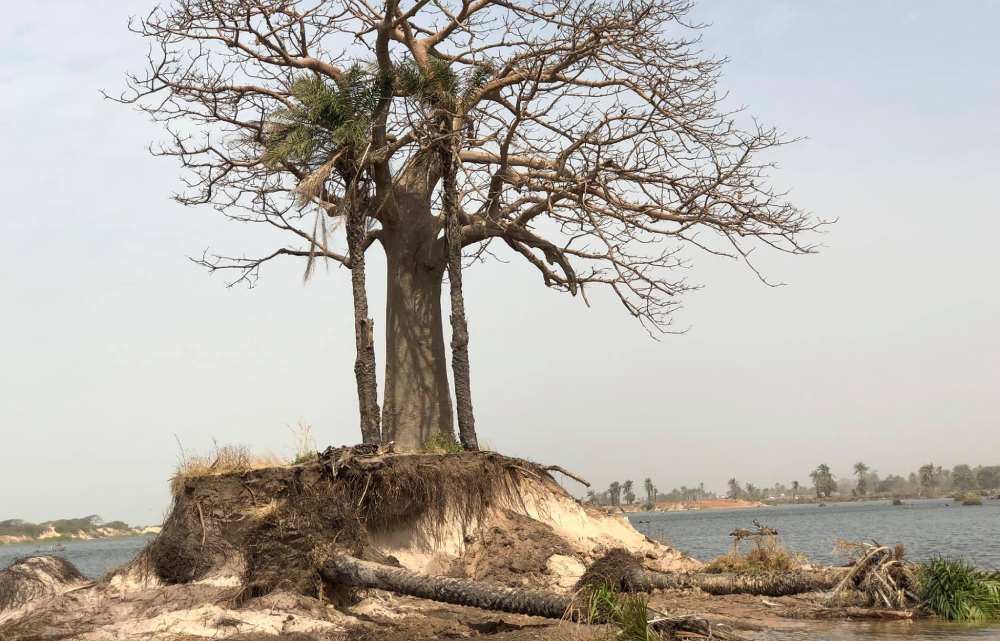
Exhausted farmland & soil
Another major challenge is the destructive farming practices we witness. Fields are burned, chemicals are used year after year, and livestock graze the land relentlessly—leaving no chance for vegetation to recover or thrive. Sand mining is destroying forests and fertile lands. Making it impossible for local people to farm here.
Why Floating Farms are a solution to this problem
Imagine a large lake or pond filled with floating rafts, where each family tends their own plot of floating gardens. With no need to cultivate the old farmland, the soil can finally rest and begin to recover. Now imagine if we could reforest that abandoned land with young trees grown on our floating farm—restoring nature while feeding the community.
Aquaponics offers a powerful solution for producing large quantities of sustainably grown, organic food.
Deforestation
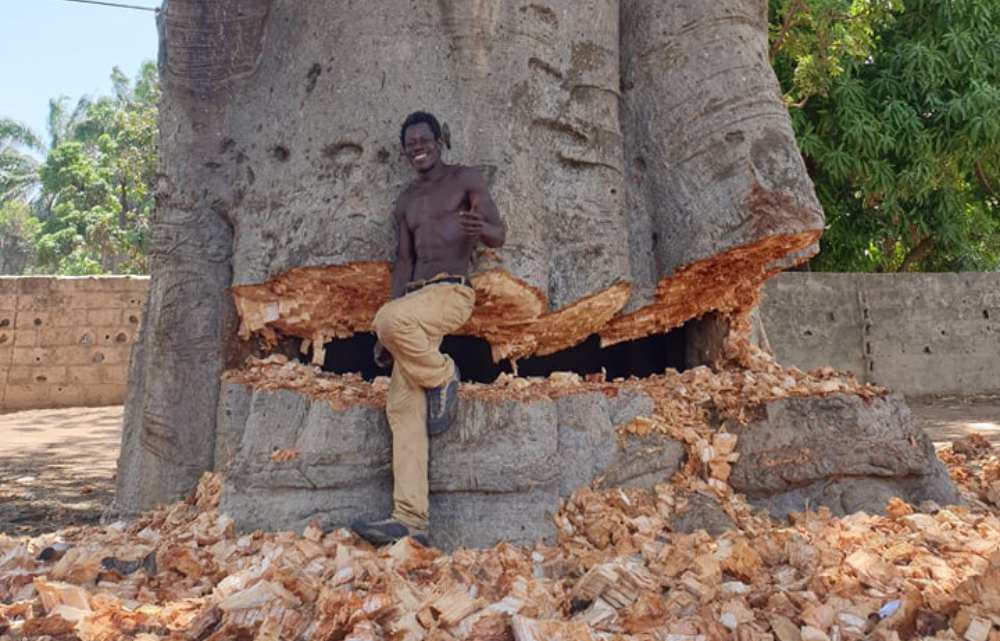
Creating new farmland often involves destroying large areas of forest, usually through burning. By growing more food on less land, we can help to reduce deforestation caused by agricultural expansion.
Why Floating Farms are a solution to this problem
Floating farming (aquaponics) allows for the production of large amounts of food in a compact space. Take tomatoes, for example—they can be planted closely together and still yield an abundant harvest, thanks to the constant supply of nutrients in the water. By using floating farms, communities can grow more food without the need to clear additional forest land for agriculture.
Other reasons why floating farms are a solution
Affordable fish is out of reach for the poorest
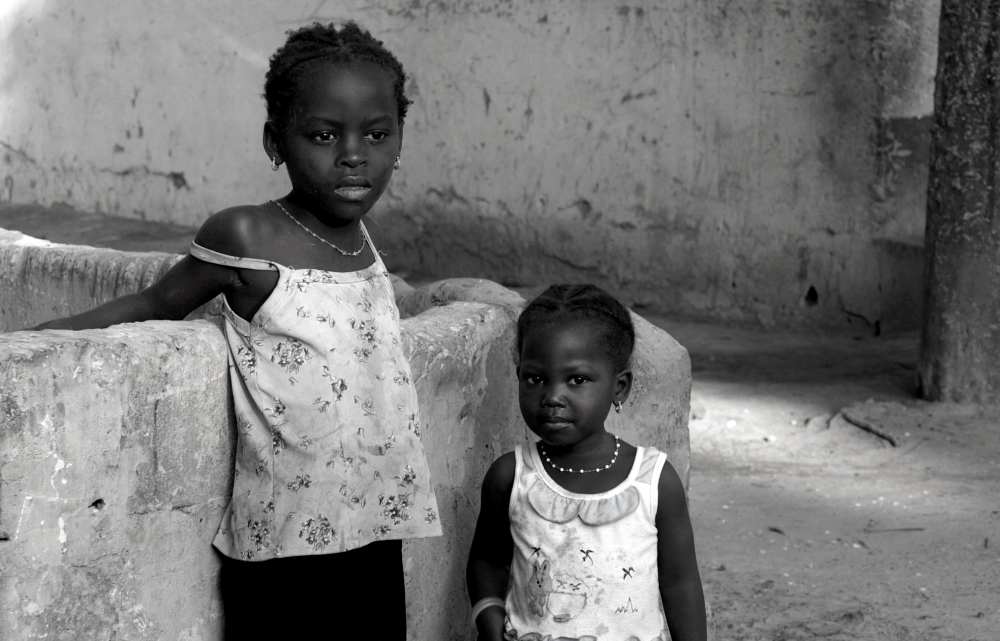
The ocean once provided affordable fish for everyone in The Gambia. But by 2025, overfishing has pushed prices so high that the poorest communities can no longer afford it. As a result, fewer people—especially expectant mothers—have access to essential nutrients like omega-3, which are critical for healthy brain development in newborns.
Why Floating Farms are a solution to this problem
With the aquaponics techniques that we use, the Floating farm can produce a huge amount of Tilapia. In the pilot project we estimate that around 37.500 kg of Tilapia can be stocked in the pond (measuring 25m wide x 50m long x 1.20m deep). With farming fish we can bring affordable fish back to the local market.
Efficiency and time management
The average woman in the Gambia spents more the 4 hours of the day on her farmland. The women are watering their lands two times a day. In some cases they also have to travel far and dangerous roads to reach their farmlands. So everyday is taking many hours just to maintain their lands. With this project, we make life of woman in Kartong a lot easier.
Why Floating Farms are a solution to this problem
With a floating farm there is no need to go to the farm and water the land 2 or 3 times a day. Nature does it all. There is no more need to throw buckets in a well to fetch groundwater to water the land. Life will be much more easy for most woman. They don’t have to travel far anymore to find fertile land to farm, they will have no backproblems anymore. They will have more spare time and have a bigger harvest then ever before.
FAQ
Which types of plants and vegetables can be grown on a floating farm?
A wide variety of plants and vegetables can be grown on a floating farm, especially those that thrive in aquaponic or hydroponic systems. Common examples include:
Leafy Greens
Lettuce
Spinach
Kale
Swiss chard
Arugula
Herbs
Basil
Mint
Coriander (cilantro)
Parsley
Dill
Fruiting Vegetables
Tomatoes (especially cherry or vine varieties)
Peppers (bell and chili)
Cucumbers
Eggplant
Staple Crops
Rice (traditionally grown in water and well-suited for floating platforms)
Certain beans and pumpkins (with structural support)
Other Options
Strawberries
Okra
Water spinach (Kangkong)
Duckweed (as animal feed or water purifier)
Why is Tilapia the perfect fish for a floating farm?
Tilapia is a perfect fish to keep in our farm for a few reasons. Reason number one is that this species is native in the Gambia and can be caught wild in river Hullahine just a mile from the farm. This way we will not introduce foreign species to this ecosystem.
Strong and easy to grow
Tilapia are remarkably resilient fish, making them ideal for aquaponic farming. They can tolerate higher levels of nitrite— a common water toxin—better than most other fish species. They also survive in low-oxygen conditions and are more resistant to disease. Another major advantage is that tilapia can thrive on natural food sources such as mosquito larvae, plankton, and duckweed, reducing the need for commercial feed.
How much fish can a floating farm produce?
As part of our pilot project, we plan to construct a pond measuring 25 meters wide, 50 meters long, and 1.2 meters deep. This will create a total volume of approximately 1,500 cubic meters (or 1.5 million liters) of water. Based on a conservative aquaculture ratio of 25 liters of water per kilogram of fish, the pond could support the production of up to 40,000 kilograms (40 metric tons) of tilapia.
Understanding Stocking Densities
The actual yield depends on the intensity of the farming system:
Extensive systems – Low yield, minimal input
Semi-intensive systems – 15–25 kg of fish per m³
Intensive systems – 40–60 kg of fish per m³ (with advanced filtration and aeration)
Conservative Yield Estimate
Using a safe, semi-intensive stocking rate of 25 kg/m³:
1,500 𝑚3 × 25 𝑘𝑔/𝑚3 =37,500 𝑘𝑔 of tilapia
This equals 37.5 metric tons per cycle.
How Many Fish is That?
Assuming an average harvest weight of 500 grams (0.5 kg) per fish:
37,500 𝑘𝑔 ÷ 0.5 𝑘𝑔 = 75 ,000 fish
Read our knowledge database
Read more about migration, aquaponics, hydroponics and similar projects around the globe.